The European Parliament’s New Landmark Vote on Migration, Explained
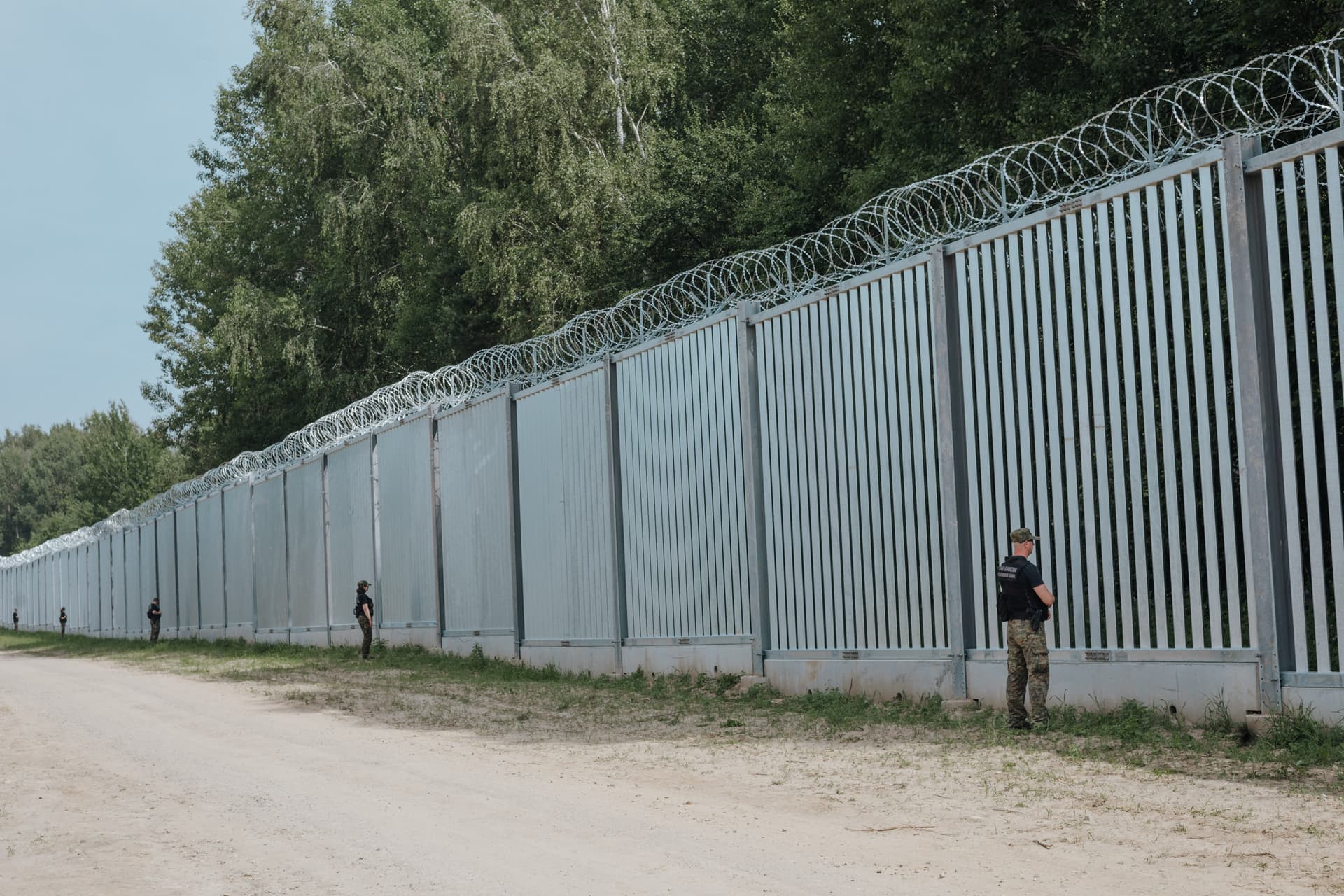
A border wall constructed between Poland and Belarus in recent years. The same wall design is being used by Greece at the Greek-Turkish border. (Photo credit: Polish Government)
Key Takeaways
In a significant shift, the European Parliament adopted a strict negotiating mandate to overhaul the EU's deportation rules, driven by an alliance between center-right and far-right factions. The Return Regulation aims to accelerate removals through measures including the legal foundation for offshore "return hubs" in third countries, expanded detention powers, the elimination of automatic appeal suspensions, and stronger penalties for non-compliant asylum seekers. A final deal is anticipated by June 2026.
On Thursday, March 26 2026, the European Parliament adopted a sweeping negotiating mandate to overhaul the European Union’s rulebook on deportations. Passing with 389 votes in favor and 206 against, the new Return Regulation aims to replace the outdated 2008 Return Directive.
Designed to close loopholes, speed up removals, and penalize non-compliance, the framework represents a fundamental shift in how the EU manages those who are denied the right to stay.
However, the passage of this legislation is as politically significant as it is legally complex. As the EU heads into rapid inter-institutional negotiations (trilogues) aiming for a June finalization, here is a pragmatic breakdown of the political realignment that made this possible, and the contents of the new regulation.
A Shift to the Right
The successful vote was not the result of a broad centrist consensus, but rather of a rightward shift in the Parliament. The mandate was secured through an alliance between the center-right European People’s Party (EPP) and factions further to the right, composed of the European Conservatives and Reformists (ECR), the Patriots, and the Europe of Sovereign Nations (ESN) groups.
This alignment, reportedly coordinated in part via WhatsApp after talks with Center-Left groups collapsed, drew fierce condemnation from the latter. The Left-wing groups (S&D, Greens/EFA, and The Left) utilized Rule 72 of the Parliament's procedures to force a plenary vote, attempting to overturn the initial committee approval. The liberal Renew group fractured, largely voting against or abstaining.
Some of the rhetoric used during the proceedings reflects the deep divide. Charlie Weimers (ECR, Sweden) declared that "the era of deportations has begun," hailing a "new consensus in Europe." Conversely, Greens negotiator Mélissa Camara lamented the vote as "the death knell of what remained of the cordon sanitaire" (the traditional informal agreement to sideline the far-right in EU policymaking). Notably, votes like this are only passing in the European Parliament because the seat distribution shifted significantly towards the right in the last European elections.
What the Reform Actually Does
Moving beyond the political theater, the text introduces highly technical, legally binding mechanisms designed to increase the EU's current, historically low return rate. The policy overhaul rests on several core pillars:
1. Return Hubs
Perhaps the most headline-grabbing provision is the legal foundation for "return hubs." The regulation allows Member States to deport rejected asylum seekers to processing and deportation centers located in non-EU third countries.
- The Guardrails: These hubs must be governed by EU or bilateral agreements, and the host country must respect international human rights and the principle of non-refoulement (the prohibition of returning individuals to a country where they face severe harm). Unaccompanied minors and families with children are legally exempt from being sent to these external hubs.
- The Momentum: This is not merely theoretical. Germany and the Netherlands (backed by Austria, Denmark, and Greece) are already pushing to have operational return hubs by the end of 2026, building on the precedent of Italy's recent deal with Albania.
2. Mutual Recognition of Return Orders
Currently, a migrant ordered to leave Germany can often cross the open border into France and restart the legal clock, exploiting disjointed national systems. The reform introduces a standardized "European Return Order," logged in the bloc-wide Schengen Information System (SIS). Crucially, it establishes cross-border enforcement. If Country A issues a return decision, Country B can now directly recognize and enforce that deportation without having to issue its own redundant legal orders. This reduces bureaucratic overhead.
3. Stripping the "Suspensive Effect" of Appeals
In a major shift to legal procedure, the reform removes the automatic "suspensive effect" of appeals. Under the old system, filing an appeal against a deportation order automatically halted the physical removal. Under the new rules, the deportation proceeds unless the migrant explicitly requests a suspension from a judge and successfully proves a risk of non-refoulement. Furthermore, returnees will have a strict maximum of 14 days to lodge an appeal.
4. Expanded Detention and Security Measures
To prevent absconding, the state’s power to detain migrants is significantly expanded:

- Extended Timelines: Authorities can order detention for up to 24 months (an initial 12 months, with a possible 12-month extension) if a migrant poses a flight risk or refuses to cooperate. Previously, the detention period was limited to 90 days in certain EU countries. Since the changes are designed as a regulation rather than an optional directive, the shorter durations will be overwritten EU-wide.
- Security Threats: Individuals flagged as security risks face unique measures. Judges can order extended detention periods, and these individuals can be held in standard prisons (separated from the general population when possible). They will also face mandatory, and potentially permanent, EU-wide entry bans.
- Alternatives: Short of detention, states can impose electronic monitoring, curfews, financial guarantees, or mandatory residence requirements.
5. Penalties for Non-Cooperation
The regulation legally obligates returnees to cooperate with their own deportation. This includes submitting biometric data, handing over travel documents, and disclosing travel routes.
If a migrant physically obstructs their removal or refuses to cooperate, Member States are enabled to deploy severe sanctions, including:
- Revoking state benefits and allowances
- Seizing identity documents
- Withdrawing work permits
- Levying financial fines
- Imposing criminal sanctions, including prison sentences, under national law
6. Minors and Emergencies
While the text states that unaccompanied minors should only be detained as an absolute last resort, it takes a hardline approach to age verification. Previously, age identification was a notoriously unreliable mechanism and regularly undermined. Now, if an individual claims to be a minor but refuses to undergo a multi-disciplinary age assessment (which can include medical and psychosocial checks), authorities are legally permitted to proceed with an age determination regardless.
Additionally, the regulation includes an emergency clause: if a sudden influx of migrants overwhelms a Member State's detention or administrative capacity, the state can temporarily derogate from standard detention conditions and appeal timelines.
7. Visa and Trade Conditionality
Recognizing that deportations are impossible without the cooperation of the migrant's home country, the reform formally embeds "conditional diplomacy" into EU law. The EU will systematically tie its foreign policy leverage—including visa issuance, trade agreements, and development aid—to a third country’s willingness to readmit its citizens.
Next Steps
The European Parliament, led by Rapporteur Malik Azmani (Renew, NL), has wasted no time. Trilogues with the Council of the EU were launched immediately following the vote. The current Cypriot Council Presidency, represented by Deputy Migration Minister Nicholas Ioannides, has set an ambitious target to strike a final deal by the end of June 2026.
Our View
While the Parliament has provided a robust legal toolkit to national interior ministries, execution will be fraught with friction. First, human rights organizations like the International Rescue Committee (IRC) have warned that external return hubs risk becoming "legal black holes." A pre-emptive IRC press release criticizing the proposed changes, and framing them as a European version of the US's ICE agency, failed to sway the outcome, as evidenced by the vote distribution. The removal of the automatic suspensive effect for appeals is virtually guaranteed to trigger a wave of litigation at the European Court of Human Rights.
Second, the geopolitical reality of "return hubs" requires willing third-country partners. Securing these agreements, while ensuring they meet the EU's strict non-refoulement standards, will test the limits of European diplomacy. However, the scope of this challenge is commonly overstated and will most likely prove to be a smaller hurdle than domestic legal interference by opposition groups.
Ultimately, the European Parliament has delivered on the political demand for a firmer migration posture. The true test of this reform will not be in its passage, but in whether Member States can smoothly integrate these rigid new rules without buckling under legal challenges and logistical bottlenecks.
Read Next

From Iraq to Iran: How Donald Trump Radicalised George W. Bush’s Foreign Policy Legacy
Not pure isolationism: Donald Trump's ‘maximum pressure’ strategy against Iran is not a retreat from world politics, but a transactional and radicalised continuation of George W. Bush's conservative internationalism. This article was written in October 2024.


Orbán is gone. What happens now?
Following their historic electoral victory over Viktor Orbán, Péter Magyar and the Tisza Party aim to fundamentally transform Hungary through a comprehensive plan designed to dismantle state corruption, revitalize the welfare system, and pivot toward a knowledge-based economy. Additionally, the new government seeks to decisively realign the country with the European Union.


Human-Scale Design: European Cities’ Biggest Bottleneck Is Right in Front of Your Eyes
European cities are actively dismantling the car-centric urban planning of the 20th century by embracing an "intermodal trinity" of walking, cycling, and public transit. This shift not only measurably improves public health, but it also democratizes mobility by ensuring equitable access for all citizens. By leveraging their historic, human-scaled infrastructure, these cities are pioneering a future where proximity and community replace congestion and pollution.