From Iraq to Iran: How Donald Trump Radicalised George W. Bush’s Foreign Policy Legacy
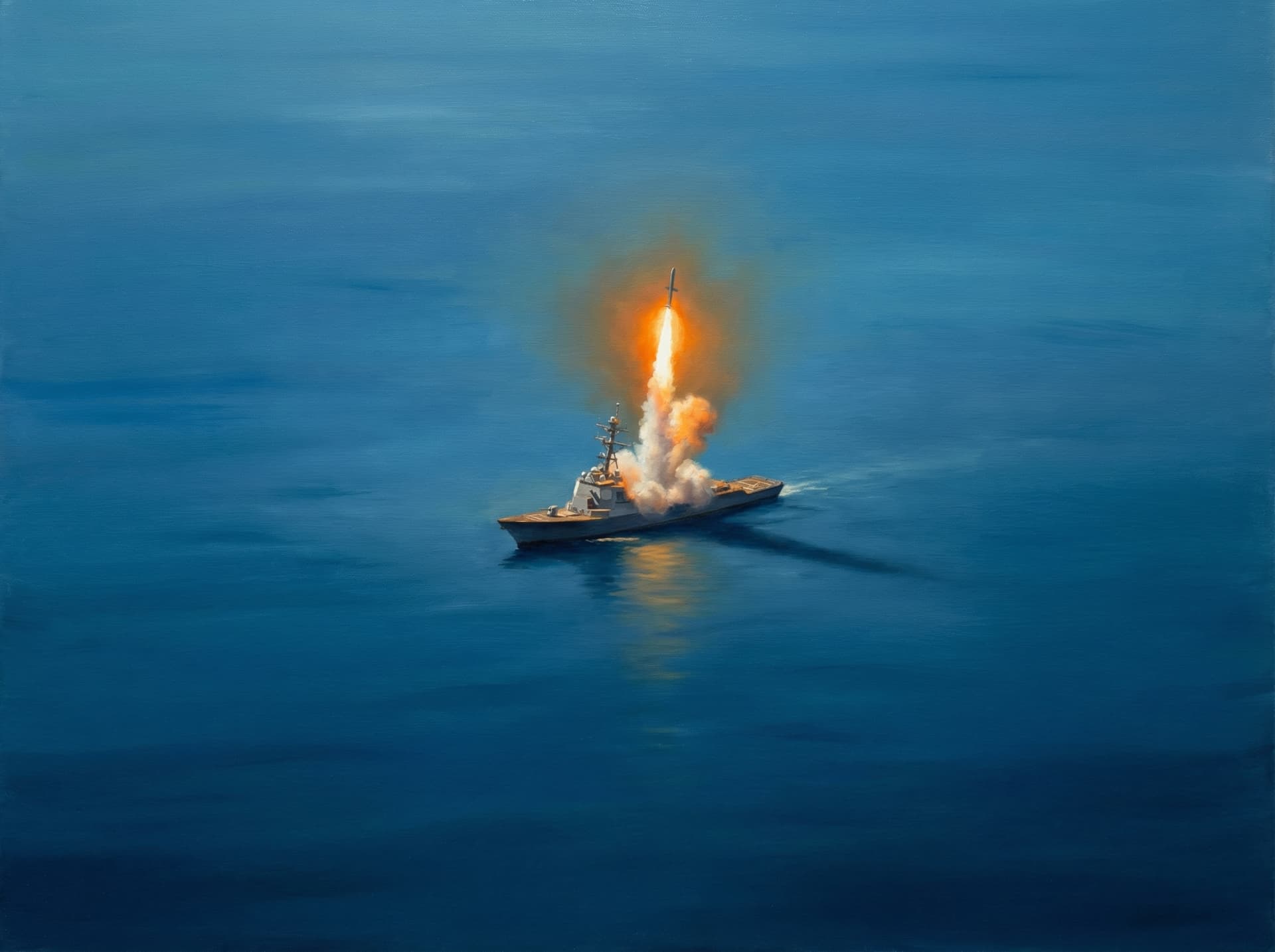
An Arleigh Burke-class destroyer fires a Tomahawk missile (illustrative).
Key Takeaways
Not pure isolationism: Donald Trump's ‘maximum pressure’ strategy against Iran is not a retreat from world politics, but a transactional and radicalised continuation of George W. Bush's conservative internationalism. This article was written in October 2024.
For political scientists, Donald Trump was always an enigma—a president who did not fit into any conventional school of foreign policy thought. This is precisely where he drew his political capital from during the campaign: As an anti-establishment candidate, he railed against the "Washington swamp" and ruthlessly condemned the costly, inefficient foreign interventions of his Republican predecessors. America had sunk trillions into the Middle East while its domestic infrastructure rotted, according to his mantra.
Because Trump broke with central neoconservative dogmas, many observers prematurely concluded: This president is an isolationist. Tariffs, protectionist rhetoric, and the apparent turning away from large-scale military interventions looked like a total American retreat from global responsibility.
But this impression is deceptive. Trump’s foreign policy is not an isolationist retreat, but rather the legacy of a completely different president: George W. Bush. Trump did indeed renounce Bush’s moral crusade to reshape the world order in America’s image. But in its place came not pacifism, but an aggressive transactionalism. The rule of "might makes right" replaced liberal norms, and hard power displaced diplomatic restraint.
The continuity of this "conservative internationalism" is nowhere more evident than where American geopolitics has been deadlocked for decades: the Middle East. If one compares Bush’s devastating Iraq War with Trump’s "maximum pressure" campaign against Iran, a common thread is revealed. Both presidents resisted multilateral commitments, both forced a hard cultural identity discourse—and both found their perfect foil in the balance-oriented diplomacy of Barack Obama.
Bush’s strategic mistakes in Iraq plunged the US into an unprecedented crisis of legitimacy. Under Trump, the very foreign policy reflexes that once triggered this crisis have not dissipated. They have radicalized.
The End of Strategic Agency: Radicalization After the Cold War
The US political system managed to win the Cold War and subsequently ascend from a superpower to a "hyperpower." This can primarily be explained by its strategic agency. To exercise this agency—and thereby influence world events to the advantage of coherent, long-term national interests—power resources must be deployed purposefully. International partners must be supported in order to mobilize them toward achieving these goals. These objectives and partnerships must project a coherent image on the world stage to establish a baseline of trust. As political scientist Gerlinde Groitl aptly analyzes, this process is complicated by the fact that the international environment is constantly changing, and shifting goals requires domestic political acceptability. Historically, this was fulfilled by several factors. Initially, there was a fundamental, bipartisan, and society-wide consensus on who the central adversary was on the global stage.
To this day, there is broad recognition among the American public that US success can be attributed to Ronald Reagan’s policy of containment. The political divides between Democrats and Republicans were reduced merely to debates over the intensity of this containment. With the end of the Cold War, however, the strategic focal point of the US was lost. The US possessed massive room to maneuver and considerable instruments of power, but only a vague basic consensus on how these should be utilized. There was agreement on the overarching goal that as many countries as possible should undergo a systemic transition to democracy. However, there was deep disagreement regarding the means by which the global crises of the time should be addressed. A profound divide emerged in foreign policy.
The Democrats relied on a combination of soft and hard power. To manage global crises, they sought to utilize their internationally unrivaled economic and military resources to alter current events in favor of national interests. In doing so, long-term partnerships, such as those with the EU, were to be strengthened. The majority of the American public favored a "peace dividend." The nuclear age had ushered in an era of war-weariness, making continuous increases in military spending less socially acceptable. The diplomatic actions of the US during the 1993 Oslo Accords are emblematic of this policy. Democratic President Bill Clinton responded to this demand and focused on "peacekeeping missions," in which the military was assigned civilian tasks.
For the Republicans, the primary goal was to maintain US supremacy. Doubts were raised both about the cuts to the military budget and the diplomatic steps taken in the Israeli-Palestinian conflict. A conflict erupted in which Republicans complained of the "misappropriation" of the military. This was partly due to the dominance of neoconservatives within foreign policy think tanks, who defended the core assumptions of global anarchy and the impossibility of enforcing diplomacy without military and economic coercion. Such theoretical premises directly shape the worldview and political starting points of decision-makers. The new generation of neoconservatives sharply criticized liberal interventionism. Thinkers like Paul Wolfowitz lamented that the military was not designed to strengthen civilian institutions. The neoconservative school of thought demanded an intensive modernization of the military, driven by the belief that America's status as a superpower could only be secured this way.
The practical successes of the détente process were consistently ignored by Republicans. For them and the military-industrial complex, continuing the 1990s trend of a shrinking military budget was out of the question. For neoconservatives and realists, maintaining American military hegemony held absolute priority; economic and soft power tools were, at best, auxiliary instruments. However, the 2000 presidential election between Al Gore and George W. Bush was dominated by domestic issues. Consequently, a militaristic stance prevailed, even though the majority of the public continued to favor a peace dividend.
The September 11 attacks, however, provided an ideal opportunity to declare a new "axis of evil" after the fall of communism, as George W. Bush put it, which could be used to legitimize increased military spending. Between 2001 and 2010, military spending rose by 80 percent, even excluding the costs of the wars in Iraq and Afghanistan. The argument that modernizing the arsenal toward "surgical weapons" would result in fewer US military casualties undermined the post-heroic attitude within American society.
Among the new generation of neoconservatives, a discourse of cultural superiority emerged following the 9/11 attacks. By striking the towers of the World Trade Center, the attacks hit symbols of American power, ultimately calling into question the US's role as a hegemon. This threat and the humiliation of American power gave rise to the belief that the US had to demonstrate to the international community once again how defensible it was in order to eliminate a potential external threat. Furthermore, since the 1980s, evangelical and fundamentalist Christian groups had been gaining influence within the Republican Party. These movements viewed the US as a divinely chosen nation, compelled by the attacks to embark on a crusade. The war was intertwined with the identity of the American nation, which purportedly had a Christian duty to fight absolute evil unilaterally and with the greatest possible military means.
This narrative of America's "moral duty" took hold among the American public. However, strategic agency requires more than just domestic support. Partners and the long-term image cultivated on the world stage must align with foreign policy maneuvers. European partners were unwilling to pursue this "moral duty," revealing a split in transatlantic security policy. Multilateral institutions, heavily shaped by the US, also saw a contradiction between these actions and the values that had been consolidated over the years. The September 11 attacks and the US response exacerbated the transatlantic divide, but they were not its sole driver. The end of the Cold War and the temporary elimination of the Soviet threat were the original causes.
Neoconservatives in international relations advocate for unilateral action by the US. They argued that the US was now so hegemonic that it could pursue its goals unilaterally and should not rely on the militarily weak Europeans. Neoconservatives viewed the military as the central argument of their foreign policy. To them, it was not merely a defense instrument, but a means to maintain global US dominance and force other countries to conform to the American model. Some structural realists, like John Mearsheimer, went so far as to predict the end of NATO after the Cold War.
In reality, however, these unilateral ambitions could not be realized. The objectives of the interventions were vague at best, and the policy of promoting regime change in Afghanistan and Iraq failed due to a lack of exit strategies. Journalist Jean-Paul Séréni once summarized in Le Monde Diplomatique how the Bush administration at the time targeted Iraq in response to an imbalance in the oil market provoked by emerging economies. Nationalism within the political system was so immense at the time that the caution of oil companies like Exxon, which expressed doubts about long-term success even before the intervention, was ignored. There were heavy doubts as to whether the administration was capable of establishing a secure Iraq after regime change. The lack of an exit strategy revealed a conceptual void among Bush's neoconservative advisors. The absolute focus on modernizing the military and acquiring power resources, coupled with a dismissive attitude toward the civilian use of the military, can be seen as the primary cause of this failure. While power resources form the basis of foreign policy agency, they are only useful if effectively deployed in the service of national interests.
The Crisis of Legitimacy Triggered by the Iraq Invasion
This resulted in international doubts regarding the US's capability to shape the international order to its advantage. Globally, the motives behind the US going to war were questioned. The interventions against Iraq and Afghanistan triggered a massive loss of reputation. The erosion of the US's role as a hegemon can be directly traced back to these interventions. The loss of reputation, the damage to the liberal world order, and the weakening of the US geopolitical position are closely intertwined. The greatest danger was that the US did not try to hide its violations of international law as other states do, but rather attempted to integrate them into existing international law.
After the institutions of international law—which the US itself had promoted for so long—clearly positioned themselves against US plans, the Bush administration formulated a direct critique against them. "The United Nations Security Council has not lived up to its responsibilities, so we will raise ours," George W. Bush declared in 2003. The delegitimization of international law, triggered by the attempt to deceive the global public, initiated a delegitimization of other international institutions that were instrumental to US supremacy—institutions such as the IMF or the World Bank, which had consolidated this position after the Second World War.
In George W. Bush's policy, there was a strong commitment to economic liberalism, but a constant delegitimization of liberal norms, both domestically and in foreign policy. As the 2002 National Security Strategy and numerous speeches by Bush demonstrate, free trade was viewed favorably. Economically, little was changed regarding liberal norms, as they had provided the US with a competitive advantage since WWII. However, the withdrawal from the Kyoto Protocol and the unilateral action in defiance of the UN Security Council in the Iraq War suggest that Bush only supported international norms as long as they offered the US an immediate competitive advantage.
From Hegemonic to Pessimistic Nationalism: Obama's Counter-Model
Obama's presidency revealed that the crisis of legitimacy had domestic as well as foreign policy consequences. Obama's doctrine was liberal internationalism. Much like neoconservatism, this doctrine included a willingness to defend the international order created by the US. The difference is that, unlike neoconservatives, who viewed military dominance and economic coercion as the only tools, liberal internationalists considered the promotion of multilateral institutions and soft power to be indispensable. For a long time, the US resisted the imperial temptation to simply dominate weaker states by embedding its power in international institutions that also constrained its own actions.
The signing of the Iran nuclear deal (JCPOA) in 2015 is emblematic of this policy. Since the 1979 Islamic Revolution, Iran had been perceived as a threat to American interests. The regime openly rejected the US-created world order, and its advancing nuclear program was seen as the first step in creating an anti-American counterweight. Acquiring a nuclear weapon would have been a threat not only to US regional partners, Saudi Arabia and Israel, but to international peace as a whole. An immediate nuclear threat was imminent; without the JCPOA, Iran could have weaponized its capabilities within a few weeks.
Instead of radicalizing the regime and its population against liberal hegemony through sanctions and aggressive rhetoric, the Obama administration chose to pursue regime change over the long term. By temporarily halting the nuclear program in exchange for resuming trade relations, the hope was that a more moderate middle class in Iran would reform the regime from within. This treaty underscores the US national interest in long-term stability. The inclusion of the UN Security Council veto powers reinforced the liberal-internationalist principle of engaging as a foundational pillar of a liberal order. The agreement was thus coherent with the fight against ISIS, whose elimination was in the mutual interest of both Iran and the US. The goal was to create an economic win-win situation. India, China, Russia, and the EU all welcomed the new economic opportunities.
This economic and peace-oriented offer ensured that China, Russia, and India brought Iran to the negotiating table. The agreement demonstrably bolstered moderate forces within Iran that favored an opening to the West and rejected confrontational foreign policy. Saudi Arabia and Israel, America's long-term partners, expressed their doubts about the plan. The Obama administration had previously criticized the timidity of the Israeli government's diplomacy—one senior official even used the term "chickenshit" to condemn Netanyahu's lack of interest in détente with Iran. Due to Israel's continued reliance on the US for security at the time, Obama was able to proceed with his plan without further consequences.
To demonstrate coherence in building long-term partnerships and fidelity to the rule of law, the Obama administration condemned the execution of Shiite cleric Nimr al-Nimr in January 2016 behind closed doors. These reprimands were kept private to avoid triggering a diplomatic crisis with a long-term partner that would have destroyed diplomatic progress.
If a state arms itself out of fear of external threats, it often triggers a classic security dilemma: the neighbor now feels threatened in turn and also arms itself—creating a dangerous cycle. To avert an escalation of the conflict, only risky diplomatic initiatives remain. A breach of trust can be costly, as there is no supranational authority to fully guarantee compliance with treaties. Because Obama was willing to communicate differences with long-term partners Israel and Saudi Arabia more openly, the Iranian regime had more confidence in US diplomacy, leading to Iranian acceptance. In such a security dilemma, political leaders often fear being perceived as naive. A great power, however, can ensure that diplomatic steps are made more politically viable. It can be stated without a doubt that relations between Saudi Arabia and Iran deteriorated drastically after Donald Trump later took office.
Trump's Unilateral Approach to Iran Policy
Trump's strategy can be defined as transactional realism with civilizational undertones. Both the realism—driven by skepticism toward multilateral institutions—and the transactionalism show clear continuity with George W. Bush's policies. Donald Trump considered the Iran deal the "worst deal in history." He used it as a political cudgel to lump Obama's course together with Bush's.
By then, the Iraq War was viewed highly critically by the American public due to its humanitarian and financial consequences. For Donald Trump, the mistakes of both Bush and Obama shared the same root cause: a conspiratorial "swamp" in Washington that championed foreign interests through liberal ideology. In both cases, Trump criticized the naivety of an elite that felt responsible for the fate of the world while ignoring the harsh laws of the international state system.
The two recurring arguments against the JCPOA were that Iran would use the time limits of the agreement to play for time and enrich itself through unfrozen assets. Both arguments overlooked the immediate nuclear threat that would have materialized without the agreement. Using these justifications, Trump unilaterally scrapped the Iran deal and initiated a regime-change policy by introducing the harshest sanctions the US had ever imposed. Due to the hegemonic position of the US dollar, all companies worldwide that traded with Iran were sanctioned.
From several perspectives, this policy is an echo of George W. Bush. First, there was the unilateral action taken against the interests of European partners. The rhetoric directed at Europeans demonstrated a low regard for the transatlantic partnership. For example, Mike Pompeo sharply criticized the Europeans' INSTEX mechanism, which was designed to bypass US sanctions. Long-term treaties, especially when multilateral institutions were involved, held no value for Trump. His criticism was directed not only at Barack Obama but directly at the UN Security Council.
During the election campaign, the JCPOA became a symbol of "globalism" acting against the interests of the American nation. Much like the neoconservatives around Bush, Trump disregarded international legal restrictions on the use of military force. In January 2020, the targeted killing of Iranian General Qassem Soleimani was ordered. Following this assassination, Trump issued explicit military threats on Twitter: “Let this serve as a WARNING that if Iran strikes any Americans, or American assets, we have targeted 52 Iranian sites (...), and those targets, and Iran itself WILL BE HIT VERY FAST AND VERY HARD.”
Iran's conflict with Saudi Arabia and Israel was sustainably exacerbated; the security dilemma returned with full force. This policy thus contradicts pure isolationism, because through active measures, massive attempts were made to exert influence over other actors. During the campaign, Trump presented himself as a "salesman" capable of closing deals. He transferred this mindset to foreign policy, which was reduced to short-term, bilateral deals to extort economic and military advantages.
Containing Iran meant securing a short-term partnership with Saudi Arabia, which was compelled to import US weapons. Trump preferred the short-term path, intensified the relationship with Riyadh, and forced a scenario in which the Europeans had to compensate for missing Iranian oil reserves with more expensive Saudi oil.
This transactional stance, similar to Bush's interventions, can be explained by the loss of the US's strategic focal point. A fatal confusion occurs between the mere possession of power resources and the actual ability to influence other actors. The Trump administration assumed that Iran could be forced into a new deal solely through military and economic deterrence. Ultimately, no better deal was achieved. Instead, the aggressive posture strengthened ultraconservative forces in Iran, caused a loss of credibility for moderate President Rouhani, and helped hardliner Ebrahim Raisi ascend to power. A regime change also failed to materialize, as the harsh sanctions primarily devastated the Iranian middle class.
A More Radical and Pessimistic Nationalism
Trump's foreign economic policy is characterized by a protectionism that deliberately circumvents international liberal norms. The public is particularly aware of his breach of the non-discrimination principle. In the course of the sanctions, however, the "security exception" of the GATT agreement was also massively overstretched, leaving Iran with almost no legal recourse against the sanctions. Herein lies a difference from Bush, who at least adhered to economically liberal norms internationally. However, Bush's support occurred in a context where emerging markets were not yet competitive, and the norms clearly benefited the US. Trump, on the other hand, governs in a multipolar world order in which international economic norms can also work to the detriment of the US—unless they are dismantled.
This multipolar world order also explains why Trump's nationalism is expressed in a significantly more pessimistic and radical manner. A veritable crusade is waged against liberal international norms. This crusade targets universalism and advocates instead for the recognition of cultural inequality. New Right ideologues within the MAGA movement hold the view that international norms dilute cultural identities. The EU is therefore viewed as an enemy because, in Trump's eyes, it has culturally homogenized itself through its supranational norms. Various conspiracy ideologies are utilized, all of which share the belief that a sinister "globalism" is to blame for the relative decline of the US.
Trade with other nations is only acceptable to these supporters if the "globalist elite" and their norms are not involved. Trump's transactionalism, which focuses on short-term bilateral agreements, can be explained by a deep ideological rejection of rights-based norms. In relations with Saudi Arabia, numerous fundamental human rights principles were simply ignored during arms and oil trades. Economic relations with Iran, however, inevitably fell under the supervision of multilateral institutions, which Trump categorically rejected. In a purely transactional trade policy, freed from binding regulations—so the narrative goes—all countries can rely on the rule of the strong.
These visions can be explained as radicalized variants of George W. Bush's American exceptionalism, as they are based on a profound belief in American superiority. The rejection of liberal norms is not limited to trade policy. This rejection is celebrated just as much when it comes to stripping refugee children of legal protections or withdrawing from climate agreements. A comprehensive narrative establishes a direct connection between all political issues: the harmful interference of foreign entities is suspected everywhere.
The rejection of soft power and the strict limitation to hard power, as already implemented during George W. Bush's presidency, has been massively amplified under Trump by a more radical identity discourse and the pressures of a multipolar world order. The central features of conservative internationalism did not, therefore, meet their end under Donald Trump—they have undergone a dangerous radicalization.
Sources
Read Next
The European Parliament’s New Landmark Vote on Migration, Explained
In a significant shift, the European Parliament adopted a strict negotiating mandate to overhaul the EU's deportation rules, driven by an alliance between center-right and far-right factions. The Return Regulation aims to accelerate removals through measures including the legal foundation for offshore "return hubs" in third countries, expanded detention powers, the elimination of automatic appeal suspensions, and stronger penalties for non-compliant asylum seekers. A final deal is anticipated by June 2026.
Orbán is gone. What happens now?
Following their historic electoral victory over Viktor Orbán, Péter Magyar and the Tisza Party aim to fundamentally transform Hungary through a comprehensive plan designed to dismantle state corruption, revitalize the welfare system, and pivot toward a knowledge-based economy. Additionally, the new government seeks to decisively realign the country with the European Union.

Human-Scale Design: European Cities’ Biggest Bottleneck Is Right in Front of Your Eyes
European cities are actively dismantling the car-centric urban planning of the 20th century by embracing an "intermodal trinity" of walking, cycling, and public transit. This shift not only measurably improves public health, but it also democratizes mobility by ensuring equitable access for all citizens. By leveraging their historic, human-scaled infrastructure, these cities are pioneering a future where proximity and community replace congestion and pollution.