For the German Social Democracts, 2026 Is About Survival. Why Is That?

Key Takeaways
The SPD's disastrous results in yesterday's state election were a personal and communication failure.
For German Social Democracy, the year 2026 marks no ordinary election cycle—it is the beginning of a struggle for survival. Anyone who thinks this choice of words is polemic should look at the resigned reactions of local SPD politicians to the first projections that evening. With a disappointing 5.5 percent of the vote, the SPD only narrowly escaped being thrown out of the Stuttgart state parliament, halving its already weak 2021 result (11.0 percent).
Germany's oldest democratic party, looking back on over 160 years of history, reliably recorded results of over 30 percent in Baden-Württemberg in the 1970s. Today, it has shrunk to the level of a marginalized fringe party. However, anyone dismissing this decline as a mere "fluke" or as the inevitable consequence of the national trend is mistaken. As we will show: the SPD's crisis is self-inflicted, and its core problem is not primarily its party platform, but rather its personnel and communication.
The "Grand Coalition Effect" That Wasn't
In political analysis, it is a popular reflex to explain poor state election results for governing parties as frustration with federal politics. But the numbers from Baden-Württemberg dismantle this theory. While the SPD plunges into irrelevance, the CDU—as the Chancellor's party and by far the more visible partner in Berlin's Grand Coalition—managed to make significant gains in Baden-Württemberg compared to 2021, reaching 29.7 percent. Therefore, there is no blanket "anti-incumbency effect" in this election. The voters of Baden-Württemberg did not punish the federal government; they passed judgment on the specific political offering and the leadership personnel of the Southwestern SPD.
Personalities Trump Platforms
The SPD's main problem revealed itself in its campaign management, which highlighted the glaring difference between a technocratic platform and political leadership.
The party entered the campaign with the slogan "Because it's about you." The accompanying posters felt like a civics lesson. While the SPD's slogans did touch on the current concerns of Germans, the message was packaged in semantics that could hardly be more passive (for example, "Because it's about secure jobs when it comes to the economy").
Lead candidate Andreas Stoch—a deserving party veteran, but largely lacking in charisma and national profile—embodied stagnation. Emblematic of the party's alienation from its former core clientele was a fatal campaign faux pas by Stoch: After visiting a food bank during a campaign appearance (mind you, in the past the term "soup kitchen" was used), he instructed his driver on camera in his car to buy duck pâté in neighboring France. It is moments of involuntary tragicomedy like this that cement the image of a party of academics that has lost sight of the lived realities of the traditional working class.
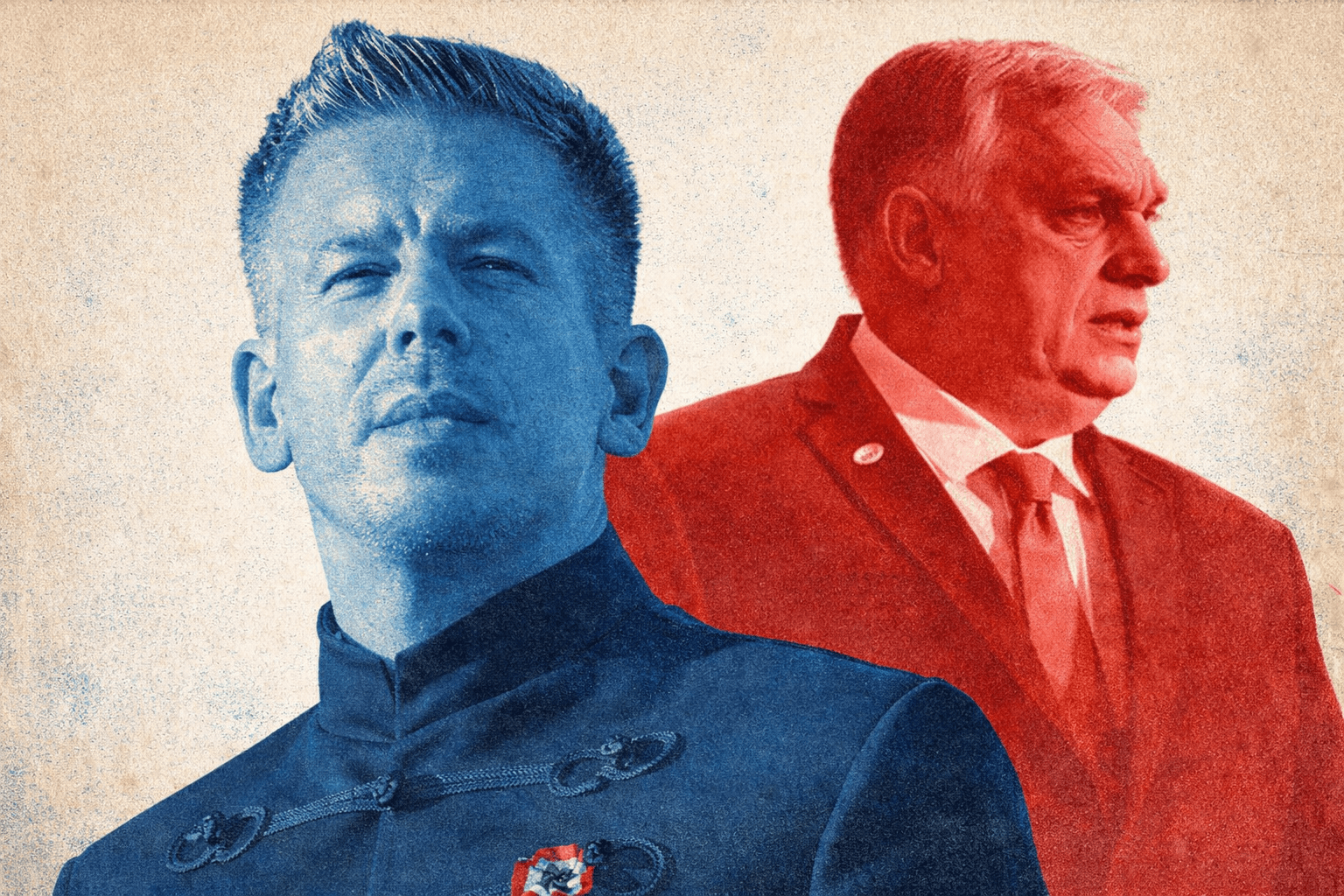
The Green counter-model couldn't have been more stark. The Greens—narrow election winners with 30.2 percent—deliberately exploited the SPD's weakness in personality. Their posters featured Cem Özdemir and occasionally Winfried Kretschmann with the slogan "You know HIM" or "Being Minister-President is a skill. Özdemir—he has it." The Greens bet everything on one card: executive experience, paternal state-leader charisma, and absolute name recognition. Özdemir was strong enough to single-handedly carry the party over the finish line. He personified a claim to leadership, while Stoch merely recited party conference resolutions on his posters.
Voter Migration: Bleeding Out into the Center
Voter migration data from infratest-dimap ruthlessly underscores this thesis. The SPD did not lose its voters primarily to the political fringes, but rather to pragmatists in the center.
Around 100,000 former SPD voters migrated directly to the Greens. This can be partially explained by tactical voting—socially oriented voters partly wanted to prevent a CDU Minister-President, Manuel Hagel, and therefore strengthened Özdemir. But this "borrowing" of votes only works when a party's own personnel are perceived as dispensable. Whoever turns their back on the SPD does not necessarily switch ideological camps; they are resigning in the face of the party's public emptiness.
Since overall voter turnout rose significantly to 69.6% (compared to 63.8% in 2021), the SPD is one of the few parties that could barely profit from the mobilization of former non-voters. While the CDU, the Greens, and above all the AfD massively mobilized non-voters, the SPD on balance tended to lose supporters to other active camps or failed to reactivate disappointed voters.
A Looming Wildfire
For the SPD party headquarters in the Willy-Brandt-Haus, the disaster in the Southwest is not an isolated phenomenon, but the harbinger of a national wildfire. A look at the upcoming elections in 2026 shows just how much the foundation of the major party is crumbling.
- Mecklenburg-Western Pomerania: Once a red fortress, the SPD is imploding in current polls, dropping from nearly 40 percent in the last election to 23 percent, while the AfD pulls away.
- Rhineland-Palatinate: In a state the SPD has governed for over three decades, it has lost its lead in the polls to the CDU (28 to 27 percent).
- Saxony-Anhalt: In structurally difficult regions in the East, the SPD has long been stuck at 8 percent, the level of a splinter party.
- Berlin: Even in urban areas, like traditionally left-wing Berlin, it is trailing in third place at 16 percent.
The weakness is omnipresent.
It Was Once a Major Party
The SPD is being torn apart by a programmatic balancing act that its current personnel cannot bridge. As reports from the party base show, a deep gap yawns between the academic, left-progressive wing (embodied, for instance, by the Young Socialists) and the pragmatic, security-oriented expectations of the traditional working class and trade unionists in the industrial centers.
But elections, as Baden-Württemberg 2026 unmistakably proved, are increasingly personality-driven. Without charismatic leaders of Johannes Rau's caliber, who can authentically moderate this internal balancing act and project trust across broad segments of the electorate, even technically high-quality election platforms ("7 reasons to vote SPD this time") vanish into thin air.
If Social Democracy does not quickly draw radical conclusions for its personnel and communication strategy from the shock of Stuttgart, 2026 will go down in history not just as the year of a lost state election campaign—but as the year the SPD ceased to be a major party.
Sources
Read Next

Margaret Thatcher’s New Britain Still Echoes Today
Margaret Thatcher’s ascent to power in 1979 marked the beginning of a fundamental restructuring of Britain’s economic and social framework.

Paving the NS Path: Elite Culpability vs. Societal Complicity in the Fall of Weimar
Conservative elites bear primary responsibility for deliberately dismantling Weimar's democratic institutions and handing power to Hitler through tactical miscalculations and shared ideological interests, yet broad societal complicity—fueled by widespread antisemitism, envy, political violence, and fragmented opposition across classes and parties—enabled the Nazi mass movement to thrive in a democratic context that lacked a culture of compromise. To prevent similar authoritarian takeovers, societies must actively defend democratic norms against elite sabotage, foster cross-ideological unity against extremism, and address underlying social resentments before they become exploitable by radical movements.

Human-Scale Design: European Cities’ Biggest Bottleneck Is Right in Front of Your Eyes
European cities are actively dismantling the car-centric urban planning of the 20th century by embracing an "intermodal trinity" of walking, cycling, and public transit. This shift not only measurably improves public health, but it also democratizes mobility by ensuring equitable access for all citizens. By leveraging their historic, human-scaled infrastructure, these cities are pioneering a future where proximity and community replace congestion and pollution.