Margaret Thatcher’s New Britain Still Echoes Today
Key Takeaways
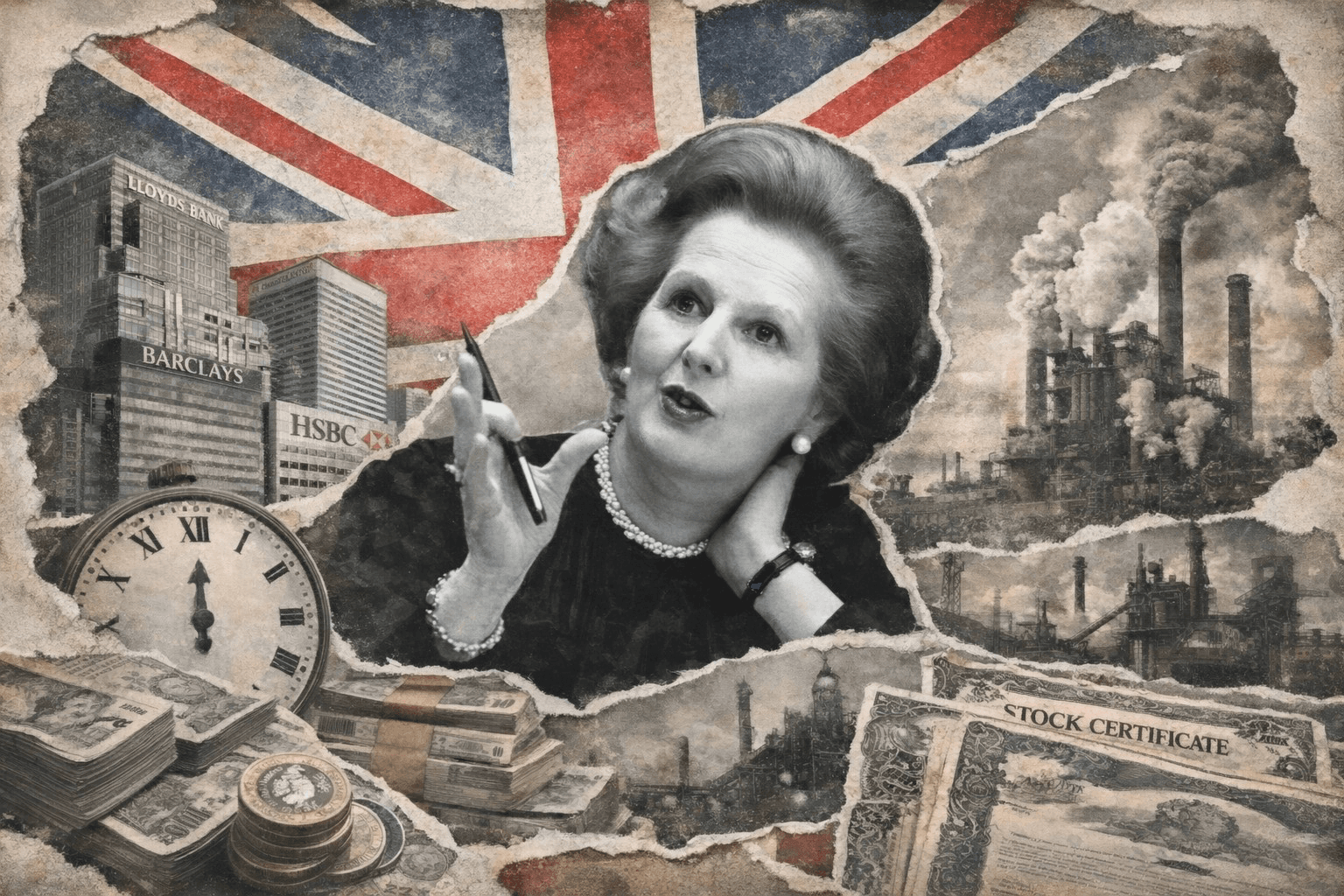
Margaret Thatcher’s ascent to power in 1979 marked the beginning of a fundamental restructuring of Britain’s economic and social framework.
To understand the ideological shifts of 1979, one must examine the post-war consensus that preceded it. The system Margaret Thatcher sought to reform was a social market economy that, for three decades, had contributed to stability and rising living standards. Formed in the aftermath of the Great Depression and World War II, it was built on a commitment to mitigate economic inequality. Both the Labour Party and the "One-Nation" wing of the Conservative Party accepted its core tenets: full employment as a primary government goal; a comprehensive welfare state, including the National Health Service (NHS); public ownership of key industries; and a recognized role for trade unions. This framework had resulted in reduced income disparity and a unified national policy direction.
However, the global conditions that sustained this model began to shift dramatically. The long post-war economic expansion, fuelled by affordable energy and American economic dominance, slowed in the early 1970s. The 1973 OPEC oil crisis sent energy prices surging, driving up global inflation. Simultaneously, Britain's older manufacturing industries, facing capital shortages, struggled to compete with the revitalized economies of Germany and Japan.
The result was "stagflation"—a challenging combination of stagnant economic growth, rising unemployment, and high inflation. The traditional Keynesian tools governments had utilized for decades to manage the economy proved less effective in this new environment. The post-war consensus began to fracture as the global economic system entered a period of unprecedented volatility.
Against this backdrop, the industrial strife of the 1970s was driven largely by economic uncertainty. With inflation reaching nearly 25%, many workers and unions initiated strikes in an effort to maintain their purchasing power and protect their living standards from declining rapidly.
This friction culminated in the "Winter of Discontent" of 1978–1979. James Callaghan’s Labour government attempted to control inflation by imposing a 5% cap on pay increases. For many public sector workers—including lorry drivers, sanitation workers, and hospital staff—this policy prompted widespread walkouts. The media prominently featured images of uncollected refuse and pervasive picket lines, framing the situation as a national crisis caused by excessive union power. Consequently, the Labour government, historically tied to the working class, faced widespread public criticism for its inability to manage the labour disputes.
Thatcher and her allies offered a distinct diagnosis for what was often termed the "British Disease," pointing to extensive state intervention, collectivism, and union power as the root causes. Her proposed solution was a fundamental overhaul of the economy, emphasizing individual responsibility and free markets over state management. Her electoral victory in May 1979 was widely seen as a mandate for change from a public frustrated by economic instability, though historians debate the extent to which voters were endorsing her specific, long-term economic strategies at the time.
The Shift Towards Free Markets
Drawing on the economic theories of Friedrich Hayek and Milton Friedman, Thatcher's government introduced sweeping market-oriented reforms.
- Privatization: Emphasizing efficiency and "popular capitalism," the government privatized numerous state-owned enterprises, including British Telecom, British Gas, British Airways, and British Steel. Additionally, the "Right to Buy" policy allowed council tenants to purchase their publicly owned homes. While this initiative created a new generation of property owners, critics note that it significantly reduced the nation's public housing stock, contributing to long-term housing challenges. Furthermore, the privatization of public utilities shifted their focus towards market profitability. Proponents argued this drove necessary efficiency, while detractors contended it led to underinvestment in infrastructure and higher costs for consumers in favour of shareholder returns.
- Reforming Labour Relations: Thatcher viewed the political and economic influence of trade unions as a major impediment to her economic vision. Her administration's confrontation with the National Union of Mineworkers (NUM) during the 1984–1985 strike was a defining moment, anticipated by strategic government planning in the preceding years. The government stockpiled coal, heavily utilized law enforcement to maintain order during pickets, and employed legal measures to restrict union funds. The eventual defeat of the strike led to a rapid decline in the coal industry, causing severe and lasting economic hardships for mining communities across Northern England, Scotland, and Wales.
- Macroeconomic Outcomes and the Human Cost: Ultimately, Thatcher’s macroeconomic policies yielded significant, yet highly polarized, empirical results. On one hand, her strict monetarist approach successfully brought inflation down from its 1970s highs into single figures by 1982. The 1986 "Big Bang" financial deregulation decisively opened the City of London to global competition, establishing it as a top global financial hub, and between 1980 and 2010, Britain's GDP per capita outgrew the rest of the G7. On the other hand, the rapid transition from a manufacturing-based economy to a service-based free market came with a devastating human cost. As older industries collapsed and strict anti-inflation measures were applied, joblessness spiked dramatically; the 1 million unemployed workers Thatcher inherited in 1979 surged past the 3 million mark within seven years, leaving profound scars on the British working class.
Ideological Foundations
Thatcher’s policies were deeply rooted in her opposition to state socialism, which she argued suppressed individual initiative, fostered state dependency, and constrained personal freedom through bureaucracy. Her philosophy was encapsulated in her remark, "The problem with socialism is that you eventually run out of other people's money." She argued that the post-war consensus had inadvertently created a "nanny state" that discouraged enterprise.
From her perspective, privatization was necessary to remove state bureaucracy from industry, and curbing union power was vital to restoring direct relationships between workers and management. Critics, however, argue that her definition of "socialism" conflated authoritarian state control with the European social market model—a system meant to regulate rather than abolish capitalism. They contend that this rhetoric was used to justify the dismantling of institutions that had previously provided economic security for millions.
The Poll Tax and Thatcher's Downfall
Despite her earlier electoral triumphs, Thatcher's uncompromising ideological approach ultimately precipitated her downfall. In 1989 and 1990, her government replaced domestic rates with the Community Charge, widely known as the "Poll Tax." This flat-rate tax system disproportionately impacted the working class and proved exceptionally unpopular. It sparked widespread civil disobedience, culminating in the massive Trafalgar Square riots of March 1990. The catastrophic domestic reaction to the Poll Tax, combined with her growing resistance to European integration, caused her own cabinet to turn against her. Fearing electoral disaster, Conservative leaders forced her resignation in November 1990.

The Reagan-Thatcher Alliance
Internationally, Thatcher's domestic agenda was bolstered by her ideological partnership with U.S. President Ronald Reagan. "Thatcherism" and "Reaganomics" shared core characteristics: supply-side tax reductions, industrial deregulation, and a reduction in organized labour's influence.
Their alliance lent international momentum to free-market economics, influencing global institutions such as the International Monetary Fund (IMF) and the World Bank. These organizations increasingly tied loans for developing nations to "structural adjustment programmes." In exchange for financial assistance, nations were often required to privatize state assets, reduce public spending, and open their markets to foreign investment.
Shifting the Overton Window
Perhaps Thatcher's most enduring political legacy was her success in shifting the "Overton Window"—the spectrum of mainstream political acceptability. Before her tenure, robust public ownership and a highly interventionist welfare state were bipartisan norms. By the time she left office, the political centre of gravity had moved decisively towards free-market principles, encapsulated in her well-known slogan, "There is no alternative" (TINA).
This ideological shift proved so influential that it shaped the platform of her political opponents. Tony Blair's "New Labour" government in the late 1990s largely retained the economic framework established during the Thatcher years. By embracing Public-Private Partnerships, financial deregulation, and a modernized approach to unions, New Labour signalled a broader mainstream acceptance of market-oriented economics.
Thatcher’s profound impact is often summarized by her controversial assertion that "there is no such thing as society." While frequently cited by critics as evidence of radical, isolated individualism, the full context of her 1987 interview reveals a philosophy grounded in personal, familial, and local duty. She originally stated: "There is no such thing! There are individual men and women and there are families... It is our duty to look after ourselves and then also to help look after our neighbour." This nuanced but firm belief in individual responsibility over social welfare fundamentally reshaped the trajectory of modern British politics.
Read Next
Orbán is gone. What happens now?
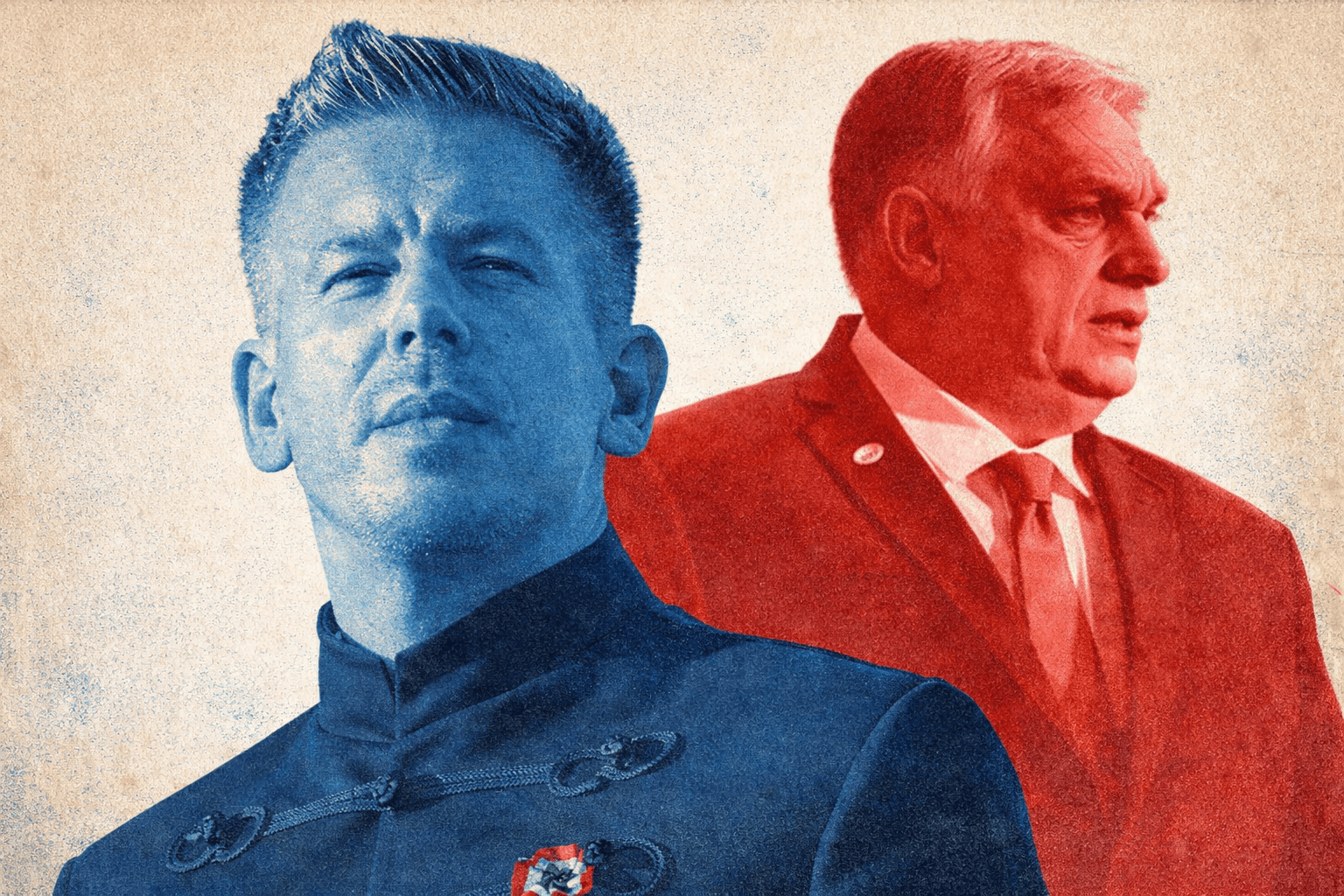
Following their historic electoral victory over Viktor Orbán, Péter Magyar and the Tisza Party aim to fundamentally transform Hungary through a comprehensive plan designed to dismantle state corruption, revitalize the welfare system, and pivot toward a knowledge-based economy. Additionally, the new government seeks to decisively realign the country with the European Union.

Closed Skies: Europe Limits US Military Logistics as Trump Threatens NATO
The ongoing US-Israeli military campaign against Iran and its regional proxies has exposed significant diplomatic strains within the NATO alliance. Over the past 72 hours, targeted decisions by several major European powers have imposed specific constraints on US and Israeli military logistics across the continent. This is not a complete breakdown of transatlantic unity, but a clear, real-time assertion of sovereign limits — driven by domestic political pressures, adherence to bilateral agreements and international law, force-protection concerns for their own troops, and differing strategic priorities.


For the German Social Democracts, 2026 Is About Survival. Why Is That?
The SPD's disastrous results in yesterday's state election were a personal and communication failure.