Writing by Pablo Rodríguez Martínez

Human-Scale Design: European Cities’ Biggest Bottleneck Is Right in Front of Your Eyes
For most of the 20th century, European urban planning suffered from a collective identity crisis. We looked across the Atlantic, saw the gleaming promise of the American highway, and decided to invite the automobile into our medieval plazas and narrow, winding alleys. We turned our historic riverbanks into high-speed transit corridors and our town squares into expensive storage units for idle cars. This approach failed a long time ago. From Paris to Prague, a quiet revolution is taking place. To truly reclaim our streets, we must embrace the "intermodal trinity". The two wheels If walking is the soul of the city and public transport is its backbone, cycling is its circulatory system. In fact, from a scientific angle, the bicycle transforms us into the most efficient large animal on the move. Bicycles are the missing puzzle piece for neighbourhoods that are too far to walk but too close to drive, effectively expanding the reach of every citizen without adding a single gram of tailpipe emissions. In cities like Utrecht and Groningen, cycling accounts for nearly 50% of all trips. This isn't due to unique cultural DNA but rather a commitment to protected infrastructure. When a city provides a physical barrier between a cyclist and a five-tonne lorry, cycling stops being an extreme sport and becomes a viable option for an eight-year-old going to school or an eighty-year-old going to the pharmacy. Furthermore, the rise of the e-bike in the 2020s has effectively flattened the topography of Europe, making cycling a more inviting alternative to driving all across the continent. Cities once considered "too hilly" for cycling, like Lisbon, Lausanne or Stuttgart, are seeing a surge in ridership. The e-bike has turned the 10-kilometre commute into a sweat-free, 20-minute breeze, further disincentivising car ownership and freeing up precious road space for green canopies and wider sidewalks. Transport symbiosis The car lobby's greatest ever trick was convincing us that freedom of movement required a two-tonne steel exoskeleton for an 80 kilogram body. We were sold a vision of the wide open road, but instead we bought into a reality of stop-and-go and gray city centers. In reality, the most profound freedom in a city is optionality: the ability to navigate your life through a fluid choice of modes. Walkability, cycling, and public transport are not separate line items in a budget, but form a symbiotic ecosystem. A city with a world-class metro but crumbling sidewalks is a "city of islands", where the last kilometre becomes an annoying hurdle. This fragmentation creates isolation, turning a five-block journey into a logistical hurdle. Copenhagen is a great example of this type of interconnection. They have a synchronised network of traffic lights that prioritises human kinetic energy over combustion engines. If a cyclist maintains a steady 20 km/h, they cross every traffic light while green ("green wave"). Simultaneously, the integration of trains and cycling creates a powerful multiplier. This Bike-and-Ride (B+R) model is the ultimate car alternative because it addresses the two biggest weaknesses of public transit: fixed routes and the final kilometre. You cycle to the station, roll onto a regional express, and cycle a few minutes to the office. It offers door-to-door agility that a bus on its own cannot match, effectively expanding the catchment area of a single train station by up to four times . Economy of the active street The most persistent myth in the "war on cars" is that pedestrianisation and bike lanes kill commerce. It is common across the Atlantic that business owners fear that if a customer cannot park directly in front of the shop, that customer will simply vanish. But the data tells a very different story. Several reports show that shifting from a car-centric city center model to active transit is not a cost, but a high-yield investment. Car-Centric Model Active/Public Transit Model Space Efficiency 1 car = 12 sqm 1 bike = 1.5 sqm Retail Spend High per visit, lower frequency Moderate per visit, high frequency Infrastructure ROI High maintenance, low return 60% to 150% return on investment, health savings of €1,170 per resident by 2050 The economic multiplier of a pedestrianised street is often driven by the relationship between dwell time and social friction, but recent analyses reveal a more complex reality of "retail-less cities". In Barcelona, while "Superblocks" (Superilles) and "15-minute city" policies aim to dynamize local commerce, they have not reversed the trend of commercial desertification. Any shift toward active transit must include strong precautions against commercial gentrification. In highly desirable pedestrianised axes in Barcelona, commercial rent prices skyrocket, forcing traditional businesses to close or pivot toward tourists and high-income expatriates. In 2026, the true cost of car dependency is more visible than ever. We often think of transport in terms of ticket prices, but the "car tax"—the sum of insurance, fuel, maintenance, and depreciation—is a regressive drain on household wealth. For a household earning the median income, the Total Cost of Ownership (TCO), which also includes the opportunity cost of space and time lost to congestion, is a massive financial burden. When this figure exceeds 10% of a household's net income, we enter the realm of what is considered transport poverty . Silent epidemic and active cure Beyond the balance sheets, another crucial metric is collective health. For decades, cities were designed to treat physical activity as an optional hobby rather than a biological necessity. The result was a sedentary lifestyle fuelling heart disease and a burgeoning mental health crisis. A 2024 national assessment in France highlighted that shifting 25% of short car trips (under 5km) to cycling could prevent over 1,800 premature deaths annually. Expanding this lens across Europe, research demonstrates that achieving a 25% cycling transport mode share across 168 European cities could prevent over 10,000 premature deaths each year. Moving toward active transportation significantly reduces exposure to air pollution, noise, and heat island effects. This shift not only decreases cardiovascular and respiratory morbidity but also improves cognitive functioning and mental health. Public transport and cycling also address " noise poverty ". Mentally rewind to the last time you were in the countryside or by the sea. Car-centric cities are inherently loud, and chronic noise exposure is more than an annoyance: it is a physiological stressor. Constant traffic noise is linked to increased cortisol and hypertension , which can lead to constant stress. Electric buses and expanded cycling networks are turning cities back into places where you can actually hear your neighbour speak, or even the birds in the trees. The democratic street A city built for cars is, by design, a city built for the able-bodied, the middle-aged, and the middle-income . It systematically sidelines the child who deserves the autonomy to walk to school, the senior who has traded their driver’s licence for a walking cane due to reduced eyesight and reaction speed, and the worker for whom car ownership is not a lifestyle choice but a crushing financial burden. Prioritising a bus lane over a parking lane is basic geometry, not "class warfare" as lobby groups like to imply. A single travel lane can move approximately 1,600 people per hour if they are in cars. That same lane can move 25,000 people per hour if it is dedicated to a high-frequency bus or light rail. In cities like Tallinn and Luxembourg, the "right to the city" has been codified through free public transit. By removing the fare-box barrier, these cities have transformed transport from a commodity into a utility , as essential and accessible as running water. Recovering the human scale Europe possesses a unique "cheat code" for the post-car era: our ancestors. Unlike the sprawling, gridlocked "stroads" of North American suburbs, the bones of most European cities were knit together at the pace of a horse’s trot and a human’s stride. We are not so much building a new future as we are recovering a lost wisdom. The medieval organic street layout, once mocked by 20th-century concrete modernists as inefficient, is actually the gold standard for the 15-Minute City. These dense, mixed-use cores are naturally resistant to the "high-speed vacuum" effect of the automobile. " We are the first generations to mistake movement for progress. Our ancestors built for proximity; we built for velocity. Returning to the former is the only way to sustain the latter. " — Nathanael Johnson Horizon The 70-year experiment of the "car-first" city is increasingly viewed as a historical anomaly, a brief detour into a high-stress, high-carbon way of life. The future of the European city belongs to a synchronised rhythm: universal walkability that treats the sidewalk as a shared living room, interconnected cycling networks that establish the e-bike as the primary vehicle for medium-range trips, and a backbone of high-capacity rail and electric buses that binds neighbourhoods together instead of dividing them into road sides. By 2030, the sound of a city should not be the noise of an engine but the collective hum of a society that has finally learnt how to move without leaving its citizens, or the planet, behind. We need to build a thriving society where we can breathe fresh air and access everything we need within a 15-minute walk. " A city is successful not when the poor have cars, but when the rich use public transportation ." — Enrique Peñalosa

The Art of Knowing Art: Pierre Bourdieu and the Invisible Currency of Taste
Pierre Bourdieu’s sociological framework suggests that "refined" taste in art is a form of acquired cultural capital used to maintain and reinforce existing social hierarchies. The article examines how these ingrained habits and institutional standards act as structural barriers to social mobility in both traditional galleries and modern digital spaces.

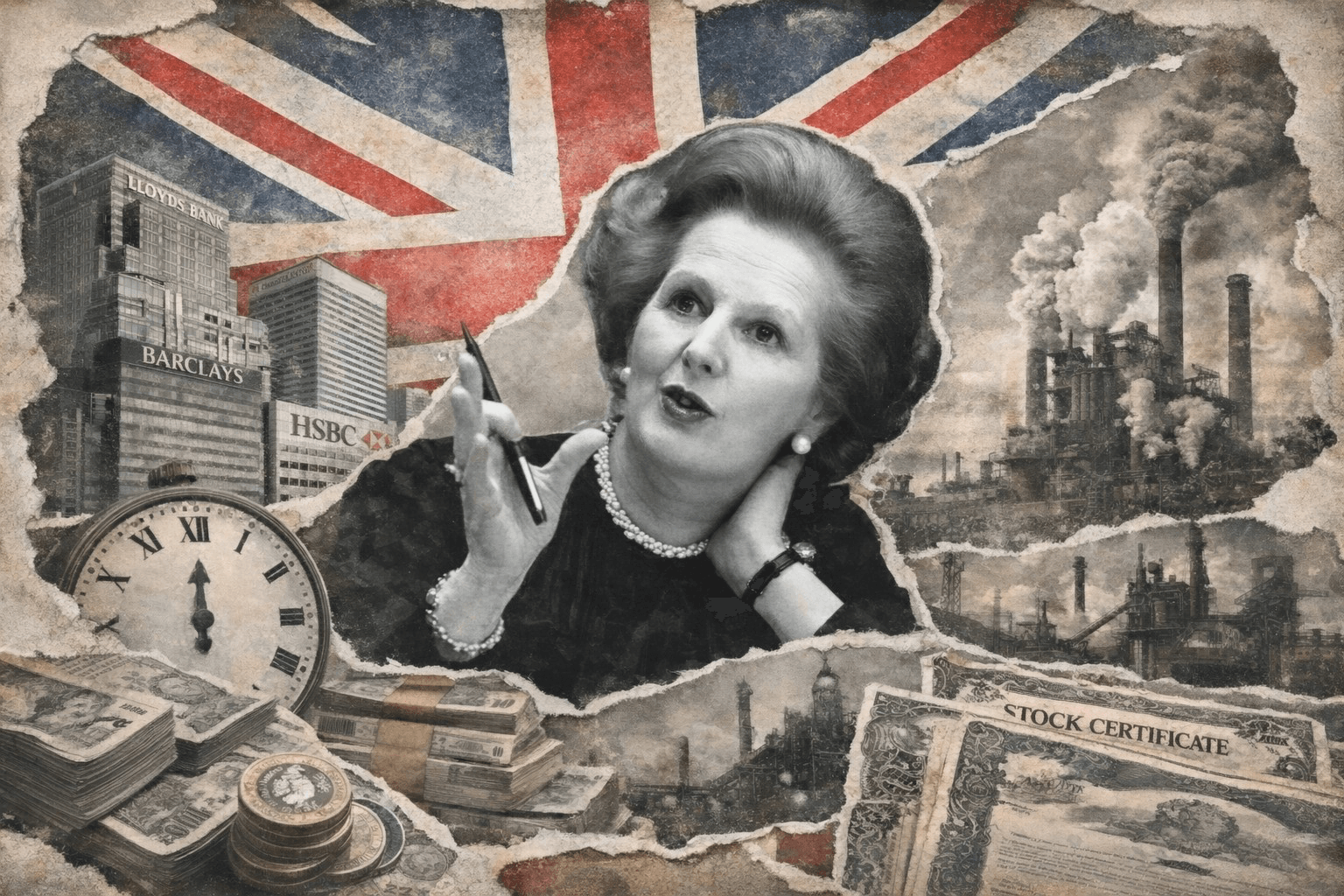
Margaret Thatcher’s New Britain Still Echoes Today
Margaret Thatcher’s ascent to power in 1979 marked the beginning of a fundamental restructuring of Britain’s economic and social framework.